 En
En  Ar
Ar War Crimes in Yemen: Sniper Fire and Mines Devastate Civilian Life
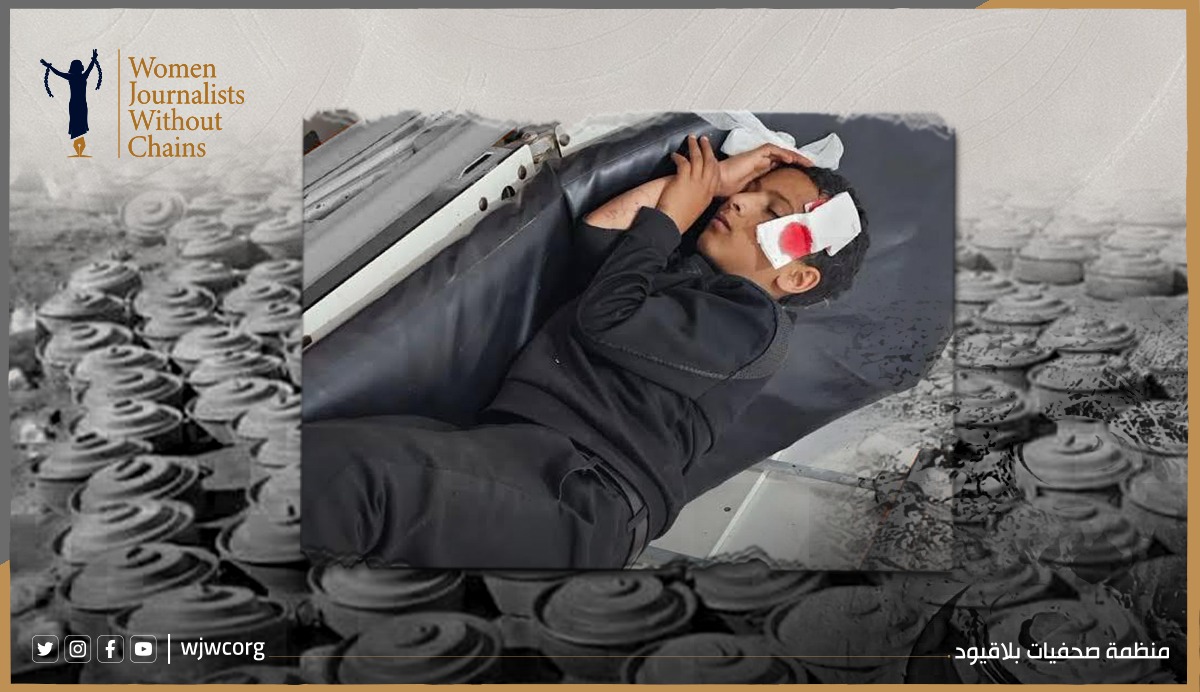
For years, civilians in Yemen have endured a sustained pattern of grave abuses linked to the Houthi militia’s conduct of hostilities. Through routine sniper fire and the widespread planting of land and naval mines in civilian areas,
entire communities have been placed under constant and lethal threat.
These violations are not incidental outcomes of armed conflict. They reveal a deliberate operational approach in which civilian life, residential safety, and economic survival are systematically disregarded. The scale and persistence of these attacks have made Yemen one of the most perilous environments for civilians, reflecting conduct that meets the threshold of war crimes under international humanitarian law.
Between the beginning of this year and 5 February, at least fifteen civilians were killed, including five children and one woman, while six others were injured in incidents involving sniper attacks and explosive devices. Taiz governorate has borne the heaviest toll, as Houthi positions overlooking populated districts continue to expose residents to direct and recurring fire.
On 5 February, fourteen‑year‑old Moatasim Jameel Abdullah Ahmed sustained a fatal head injury after being shot near his home. Just days earlier, on 29 January, twenty‑three‑year‑old Asma Ali Naji Saeed was killed by sniper fire while hanging laundry on her rooftop, shortly after her marriage. These cases reflect a disturbing pattern in which civilians are targeted within spaces traditionally regarded as safe — their homes and immediate surroundings.
Landmines continue to exact a devastating human cost. On 13 January, three children from a single family were killed in Marib when an explosive device detonated as they played near their residence. On 25 January, farmer Zaid Haidar Suleiman Halabi was killed by a landmine while tending his farmland north of Mokha.
Another explosion on 5 February in Hayfan district, south of Taiz, killed the child Ahmed Nasser Omar Saleh and injured his cousin. These incidents illustrate how landmines remain embedded within civilian environments, creating long‑term threats that extend far beyond active frontlines and disproportionately affect children, agricultural workers, and rural populations whose livelihoods depend on safe access to land.
The danger extends into Yemen’s coastal waters, where naval mines have become a lethal hazard for fishermen and civilian maritime activity in the Red Sea. On 1 February, a naval mine struck a commercial vessel off the coast of Dhubab, killing eight civilians from the village of Wahija and injuring two others. Several victims, including fishermen, died immediately, while others later succumbed to their injuries. The placement of naval mines in waters used by civilian vessels introduces indiscriminate risks, disrupting livelihoods and placing maritime communities under continuous danger.
These incidents align with a broader and well‑documented pattern. A 2025 human rights assessment recorded approximately ninety‑eight civilian casualties across eight Yemeni governorates resulting from landmines and improvised explosive devices, alongside twenty‑four civilian casualties caused by sniper attacks. Children and women accounted for at least one‑third of those affected, underscoring the indiscriminate and sustained nature of these violations. The persistence of such attacks demonstrates an entrenched environment of impunity and raises serious concerns about the systematic targeting of civilians in violation of the fundamental principles of distinction and proportionality governing armed conflict.
The deliberate targeting of civilians through sniper fire, as well as the widespread planting of land and naval mines in civilian areas, constitutes prosecutable war crimes under the Geneva Conventions and the Rome Statute of the International Criminal Court.
Anti‑personnel landmines are explicitly prohibited under the 1997 Ottawa Convention, while naval mines deployed in civilian maritime zones are internationally recognized as weapons with indiscriminate effects. These violations also amount to serious offenses against children under the Convention on the Rights of the Child and its related protocols, reinforcing the urgent need for international criminal accountability for those responsible at all levels of command and execution.
The absence of decisive international action risks reinforcing patterns of abuse and emboldening perpetrators to continue targeting civilians with little consequence. Yemen’s civilian population — particularly children, women, farmers, and fishermen — remains exposed to escalating and preventable harm.
The United Nations, international accountability mechanisms, and the broader international community bear both legal and moral obligations to take immediate and effective steps to strengthen civilian protection. This requires the establishment of independent international investigations into sniper attacks and mine deployment, the prosecution of those responsible, and the reinforcement of mechanisms designed to prevent impunity.
At the same time, urgent expansion of demining operations is essential, alongside comprehensive victim assistance programs and long‑term rehabilitation and compensation initiatives. Strengthening protective frameworks for civilians remains critical to mitigating the daily risks confronting Yemeni communities.
Beyond Yemen, the continuation of such violations carries wider implications for the credibility of the international legal order. Allowing systematic attacks against civilians to proceed without accountability weakens global enforcement of humanitarian law and erodes confidence in international justice mechanisms.
Timely and credible accountability is therefore indispensable — not only to protect Yemeni civilians, but also to preserve the integrity of international humanitarian norms and deter the recurrence of such violations in future conflicts.
Released by:
Women Journalists Without Chains
February 7, 2026