 En
En  Ar
Ar 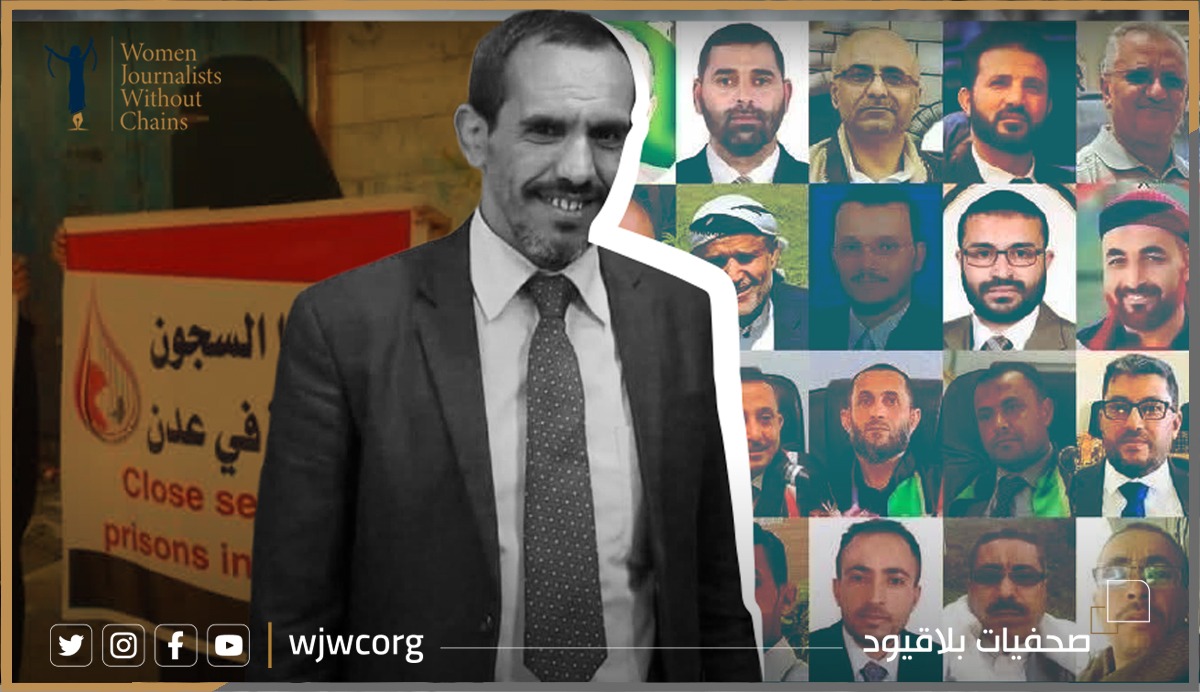
Yemen – March 18, 2026 – Women Journalists Without Chains stated that Eid al-Fitr this year comes amid a continued deadlock in the issue of prisoners, abductees, and forcibly disappeared persons in Yemen, with no tangible progress recorded.
The organization said the ongoing impasse deepens an already severe humanitarian crisis, prolonging the suffering of thousands of families who had hoped the holiday would bring a long-awaited breakthrough. Many detainees and disappeared individuals have remained in captivity for nearly eleven years, in what Women Journalists Without Chains described as a sustained violation of fundamental legal and human rights.
Women Journalists Without Chains noted that the absence of progress, despite the humanitarian significance of Eid and its association with tolerance and justice, reflects a failure by relevant parties to meet their legal and moral obligations. The continued inaction, it said, perpetuates the hardship faced by detainees and their families, with no credible indications of imminent resolution.
The organization added that preventing families from reuniting with detained or disappeared relatives during a major religious occasion constitutes an additional layer of harm. It underscored that arbitrary detention and enforced disappearance continue to be practiced without accountability.
Women Journalists Without Chains further highlighted that the prisoner exchange agreement signed in Muscat, Oman, in December 2015 between the internationally recognized government and the Houthi group, under United Nations auspices, remains unimplemented. The organization described the agreement as a stalled commitment lacking the necessary political will for execution, leaving thousands of cases unresolved.
In a related context, Women Journalists Without Chains expressed concern over the continued lack of progress in addressing cases of enforced disappearance, particularly in detention facilities operating outside legal oversight in the interim capital, Aden. It noted that no concrete steps have been taken to clarify the fate of those disappeared or to ensure accountability, despite the passage of more than two months since directives were issued by the Presidential Leadership Council to close such facilities and address the issue.
The organization considered this lack of implementation indicative of insufficient commitment to resolving the matter and a continuation of practices that undermine rights and freedoms.
Women Journalists Without Chains stressed that resolving the issue of prisoners, abductees, and the forcibly disappeared is an urgent humanitarian priority that cannot be deferred. The prolonged failure to address this matter, it warned, signals a broader absence of political will to resolve one of Yemen’s most critical human rights concerns.
The organization renewed its call for the immediate and comprehensive implementation of the Muscat agreement, without delay or selectivity, describing it as a binding humanitarian and legal obligation. It also called for the unconditional release of all individuals subjected to arbitrary detention, abduction, or enforced disappearance, including those not covered by the agreement.
Women Journalists Without Chains urged authorities to disclose the fate and whereabouts of all forcibly disappeared persons, particularly in Aden, to close all unofficial detention facilities, and to ensure that all places of detention operate under judicial oversight. It further called for accountability for those responsible for violations, including enforced disappearance and arbitrary detention.
The organization also called on the international community, including the United Nations and relevant human rights mechanisms, to take more effective action. This includes exerting pressure on all parties to comply with their obligations, supporting the implementation of existing agreements, ensuring transparency regarding the fate of detainees, and facilitating independent international investigations aimed at accountability.
Women Journalists Without Chains concluded that Eid al-Fitr cannot fully reflect its humanitarian and moral significance while thousands of families remain separated from their loved ones. It emphasized that meaningful respect for the occasion requires concrete steps to resolve this issue, end violations, and uphold justice and the rule of law.